Energy & Science: STEM Camps for Houston Teens
Houston's best STEM camps for teens in 2026. Compare 5 portfolio-building programs at Rice, UH, HMNS, and TXRX Labs from $250-$700/week for ages 13-18.
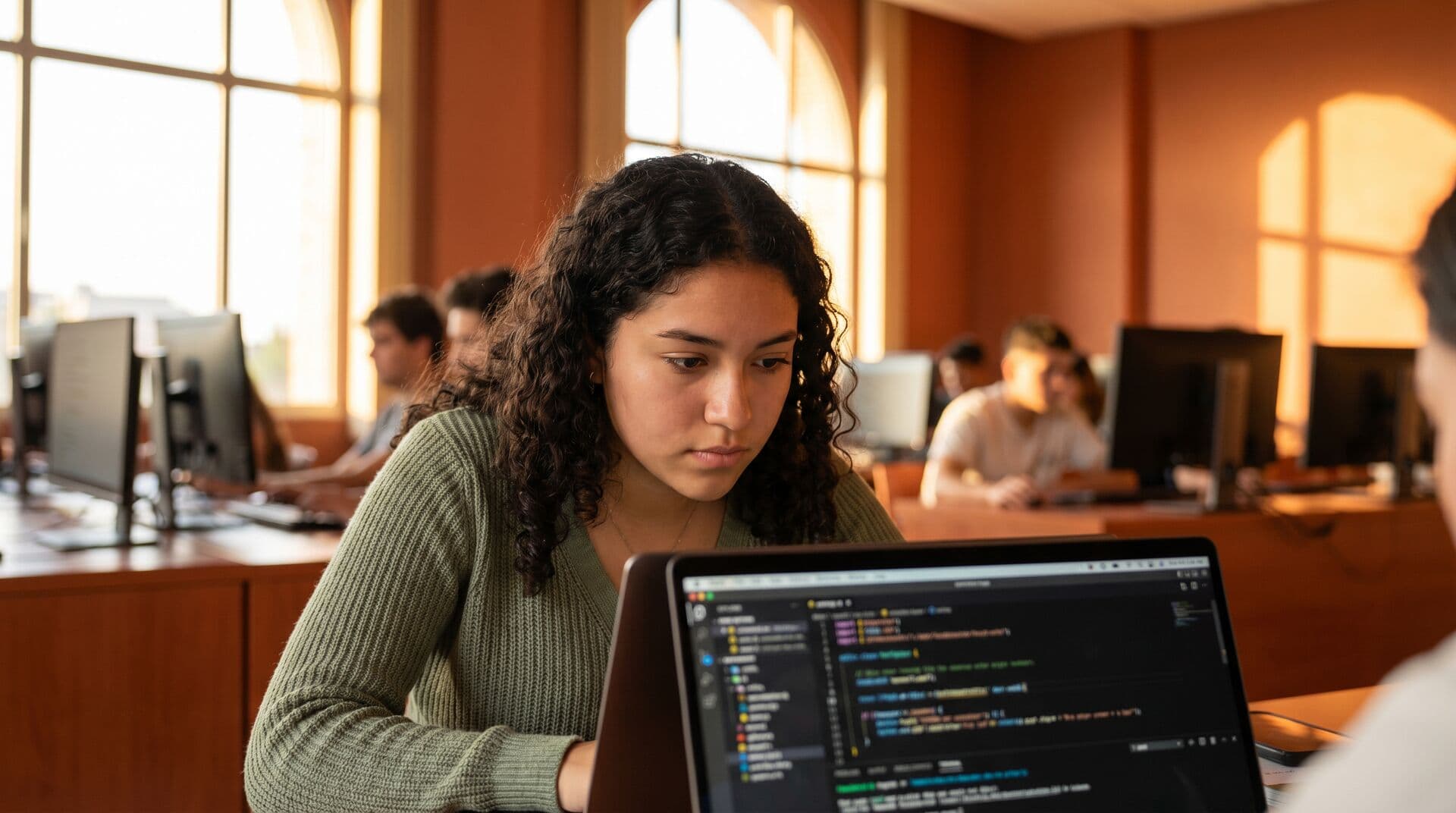
When your child hits 13, the summer camp market changes drastically. They age out of the franchise LEGO camps and the Code Ninjas drop-in model. They need programming that's rigorous enough to hold their attention and, increasingly, to strengthen a college application.
Houston's unique economy makes this easier than it sounds. According to the Greater Houston Partnership (2025), the Houston metro area employs more than 230,000 workers in the energy sector alone. That concentration of engineering talent spills directly into summer programming. University labs open their doors. Working professionals teach workshops. Industry sponsors fund scholarships that keep costs lower than you'd expect.
The result is a tier of teen STEM camps you simply won't find in most American cities.
Key Takeaways
- Houston offers at least five distinct portfolio-building STEM camps for teens ages 13-18
- Programs range from $250 to $700 per week, with scholarship options at UH and TXRX Labs
- The energy sector creates camp content around solar, wind, and hydrogen that's unique to Houston
- College admissions officers increasingly value demonstrated project work over generic participation certificates (NACAC, 2024)
What STEM Camps Actually Build a College Portfolio?
A 2024 survey from the National Association for College Admission Counseling (NACAC) found that 78% of admissions officers rated "demonstrated interest through project-based activities" as more valuable than standardized test scores when evaluating extracurriculars. For Houston teens, this changes the calculus on summer camps entirely.
Not every STEM camp qualifies. The difference between a portfolio-building program and a glorified day care is what your teen walks away with on the last day. Can they show an admissions counselor a compiled application, a functional prototype, or a research poster? Or do they just have a certificate that says "attended"?
Here's how the top Houston programs compare on the metrics that matter.
Houston Teen STEM Camp Comparison (2026)
| Program | Focus | Ages | Approx. Cost/Week | Location | Portfolio Output | |, , , , -|, , , -|, , , |, , , , , , , , , , |, , , , , |, , , , , , , , -| | iD Tech at Rice | AI, cybersecurity, game dev | 13-17 | $600-$700 | Rice University campus | Functional app or game, code portfolio on GitHub | | UH Engineering Academy | Civil, mechanical, energy engineering | 14-18 | $300-$500 | University of Houston | Engineering design project, team presentation | | HMNS Backstage Pass | Lab science, paleontology, forensics | 13-15 | $250-$350 | Houston Museum of Natural Science | Lab notebook, research summary | | TXRX Labs Maker Camp | Fabrication, welding, CAD, 3D printing | 13-18 | $275-$400 | East End (Second Ward) | Physical prototype, CAD files | | Clear Lake Marine Science | Marine biology, coastal ecology | 14-17 | $300-$450 | Clear Lake/Galveston Bay | Field research report, specimen analysis |
Citation Capsule: According to NACAC (2024), 78% of college admissions officers now rate demonstrated project work higher than test scores when evaluating extracurriculars, making portfolio-output summer camps a strategic investment for high school students.
How Does the Energy Sector Shape Houston's Teen STEM Camps?
Houston employs more than 230,000 energy sector workers, according to the Greater Houston Partnership (2025). That workforce creates a pipeline of expertise that feeds directly into teen summer programming, from guest lecturers to sponsored lab equipment. No other American city offers this concentration of energy-focused STEM content for teenagers.
What makes Houston's energy camp ecosystem genuinely different is the transition happening in real time. The city's traditional oil and gas infrastructure is evolving alongside a growing renewable energy sector. Teens in these programs aren't learning about solar panels from a textbook. They're working with professionals who are actively engineering the shift.
Renewable Energy Content in Houston Camps
Several programs now incorporate renewable energy modules. The UH Engineering Academy, for instance, has added solar panel design and hydrogen fuel cell projects to its curriculum, drawing on the university's partnerships with companies in the Texas Medical Center energy research corridor.
Programs in the Clear Lake area often integrate wind energy content, given the Gulf Coast's wind patterns and the growing offshore wind industry. Students learn about turbine design, energy storage, and grid integration, topics that would be purely theoretical in most cities but are tangibly real here.
We've found that parents often overlook the energy angle when searching for teen STEM camps. But here's the practical reality: energy engineering is one of the fastest-growing career fields in Texas. A teenager who spends a summer building a solar tracker or modeling hydrogen storage isn't just padding a resume. They're getting an early look at a career path that will be hiring aggressively for the next two decades.
Citation Capsule: The Greater Houston Partnership (2025) reports that Houston's energy sector employs more than 230,000 workers, and the city's energy transition is generating new summer camp content focused on solar, wind, and hydrogen technologies that teens cannot access in other metro areas.
Where Do Houston Teens Learn Real Fabrication Skills?
TXRX Labs, Houston's largest nonprofit makerspace, operates out of a 30,000-square-foot facility in the East End. According to their 2025 program report, over 400 teens completed fabrication courses in the previous year. This is not a classroom with 3D printers on a shelf. It's a working shop.
The distinction matters. Most "maker" camps for younger kids involve pre-cut kits and supervised assembly. At TXRX, teens operate real equipment: laser cutters, CNC routers, MIG welders, and industrial 3D printers. They design their own projects in CAD software and build them from raw materials.
What Teens Actually Build at TXRX
A typical two-week intensive at TXRX follows a project arc. During the first week, students learn the tools, including CAD modeling in Fusion 360, basic electronics, and shop safety. The second week is dedicated to a self-directed build. Past projects have included custom drone frames, functional guitar amplifiers, and architectural models.
The portfolio value here is distinct from a coding camp. Your teen walks out with a physical object they designed and fabricated themselves, plus the CAD files and documentation to prove it. For students applying to engineering programs, this is precisely the kind of hands-on evidence that a transcript alone can't communicate.
maker and fabrication programs
Citation Capsule: TXRX Labs (2025) reported that over 400 Houston teens completed fabrication courses in their 30,000-square-foot makerspace, using industrial equipment including laser cutters, CNC routers, and MIG welders to build self-directed projects.
What About Marine Science and Environmental Programs?
The Clear Lake and Galveston Bay corridor gives Houston something most inland cities can't offer: field-based marine science. According to Texas Parks and Wildlife (2025), Galveston Bay is one of the most productive estuarine systems in the Gulf of Mexico, supporting over 350 species of birds and dozens of fish and invertebrate species.
Several programs in the area run summer intensives for teens that go well beyond tide pool identification. Students collect water quality samples, conduct transect surveys, and analyze data on local species populations. Some programs partner with the Galveston Bay Foundation for access to restricted research sites.
Why Marine Science Stands Out on Applications
What's genuinely different about these programs is the field component. While a chemistry camp might produce a lab report, a marine science camp produces field research, something that reads as closer to actual scientific work on a college application.
Marine science camps in the Clear Lake corridor are undervalued in the Houston market. They cost less than the headline university programs, but the research output is arguably more compelling for admissions. A field notebook documenting water quality trends in Galveston Bay demonstrates scientific method, data collection, and environmental awareness in a single artifact.
Students who complete these programs often continue as volunteers with conservation organizations, which creates a sustained extracurricular narrative that admissions officers value highly.
Citation Capsule: Texas Parks and Wildlife (2025) documents Galveston Bay as one of the Gulf's most productive estuarine systems, and teen marine science camps in the Clear Lake corridor produce field research portfolios that demonstrate scientific method for college applications.
The Portfolio Question: What Do Colleges Actually Want to See?
The MIT Admissions blog has stated directly that they value "evidence of genuine engagement over polished packaging." A 2023 Harvard Crimson survey of admitted students found that 65% cited a specific project or research experience as the strongest element of their application. For parents evaluating teen camps, this creates three clear evaluation criteria.
1. What Is the Final Output?
Your teen should leave with something tangible. A compiled program. A physical prototype. A research abstract. A lab notebook. "Certificate of completion" is not a portfolio piece. Ask the camp director what students take home on the last day. If the answer is vague, that's your signal.
2. Who Is Teaching?
At this age, the instructor needs to be a subject matter expert. A computer science graduate student. A working engineer. A museum researcher. General camp counselors with a weekend training course won't challenge a motivated 16-year-old. Ask about instructor qualifications before you register.
3. Is the Program Age-Segmented?
This is non-negotiable. A 16-year-old will not thrive in a class that also includes 11-year-olds. The pace, the content depth, and the social dynamic all suffer when the age range is too wide. Confirm that the program is strictly for high schoolers, or at minimum segments by skill level with tight age bands.
Citation Capsule: A 2023 Harvard Crimson survey found that 65% of admitted students cited a specific project or research experience as the strongest element of their application, making tangible portfolio output the most important criterion when evaluating teen STEM camps.
How Do University-Level STEM Camps Compare?
University-hosted programs consistently rank as the strongest STEM experiences for teens, according to a 2024 ACA (American Camp Association) report showing that 82% of university-affiliated camps include a capstone project component, compared to just 34% of franchise operations. In Houston, two programs stand out.
iD Tech at Rice University
iD Tech runs intensive one- and two-week sessions on the Rice University campus. For teens, the curriculum shifts from basic game design to serious computer science: machine learning, artificial intelligence, cryptography, and advanced C++. Students work in small groups with instructors who are typically undergraduate or graduate CS students.
The key differentiator is the output. Students leave with actual code, hosted on GitHub or deployed as a functional web application. This is portfolio material that an admissions officer, or a future employer, can actually review.
University of Houston Engineering Academy
UH runs summer engineering academies specifically for high school students. These programs draw on the university's strong ties to the Houston energy sector, focusing on civil, mechanical, and energy engineering. Students work in university labs alongside graduate researchers.
UH also offers need-based scholarships for these programs, which matters. Not every family can absorb $500 to $700 per week. The scholarship pipeline is one of the genuine advantages of university-hosted camps over private operators.
Citation Capsule: The American Camp Association (2024) found that 82% of university-affiliated STEM camps include a capstone project, compared to just 34% of franchise operations, making university-hosted programs the stronger choice for portfolio-building teen experiences.
FAQ
Which Houston STEM camp is best for college applications?
iD Tech at Rice University and the UH Engineering Academy produce the strongest portfolio pieces for college applications. A 2023 Harvard Crimson survey found 65% of admitted students cited specific projects as their strongest application element. Choose based on your teen's interest: coding and AI at Rice, engineering and energy at UH.
What are the age requirements for teen STEM camps in Houston?
Most teen STEM programs in Houston serve ages 13-18, though specific cutoffs vary. iD Tech accepts students up to 17. HMNS Backstage Pass caps at 9th grade (approximately 14-15). TXRX Labs and UH programs generally accept 14-18. Always verify age eligibility directly with the program, as some sessions are further segmented by skill level.
How much do Houston teen STEM camps cost per week?
Costs range from approximately $250 per week at HMNS to $700 per week for iD Tech residential sessions at Rice. The median across the five major programs sits around $350 to $400 per week. UH and TXRX Labs both offer need-based financial assistance. For a broader cost breakdown, see our Houston Summer Camp Cost Guide.
Are there non-STEM summer options for Houston teens?
Absolutely. Houston offers strong teen programming in theater through TUTS, competitive athletics through sports-specific camps, and creative writing through WITS. Many parents combine a STEM intensive with an arts or athletics camp across different weeks for a balanced summer.
Conclusion
Houston's teen STEM camp market is stronger than most parents realize. The energy sector, university infrastructure, and nonprofit makerspaces create a set of options that genuinely prepare teenagers for college applications and, more importantly, for the work itself.
Start by identifying what your teen wants to build: code, hardware, field research, or engineering designs. Then match that interest to the program with the strongest portfolio output. Register early. The best university programs, particularly iD Tech at Rice, fill by late March.
For a broader look at teen options across all categories, see our guide to Academic Prep & Gifted Programs. For the full Houston landscape, start with the Houston Summer Camps 2026 Complete Guide.
Sources
Planning your kid's whole summer?
Don't piece it together one camp at a time. Tell us your weeks and kids' ages, and we'll build a week-by-week plan that fills every week — free, no account needed to start.
Related Articles

Portland After-School Programs by Neighborhood
Finding an after-school program in Portland is one thing. Making it fit your family's actual schedule, commute, and budget is another. This guide is for parents who need solutions, not just lists.

Denver After-School Programs by Neighborhood
Finding after-school care in Denver isn't just about a list of programs. It's about the daily grind: pickup, traffic, and making sure your kids are safe and engaged until you're off work. Let's talk real logistics.
Houston After-School Programs by Area: Why Zip Code Matters
Houston after-school programs aren't one-size-fits-all. We cut through the noise to help you find options that fit your family's commute, budget, and real-world schedule, neighborhood by neighborhood.