Portland Arts and Theater Camps: An Honest Guide
Portland has 47 arts and performing arts camps in 2026. See what makes each program different, what they cost, and find which ones are worth the investment.
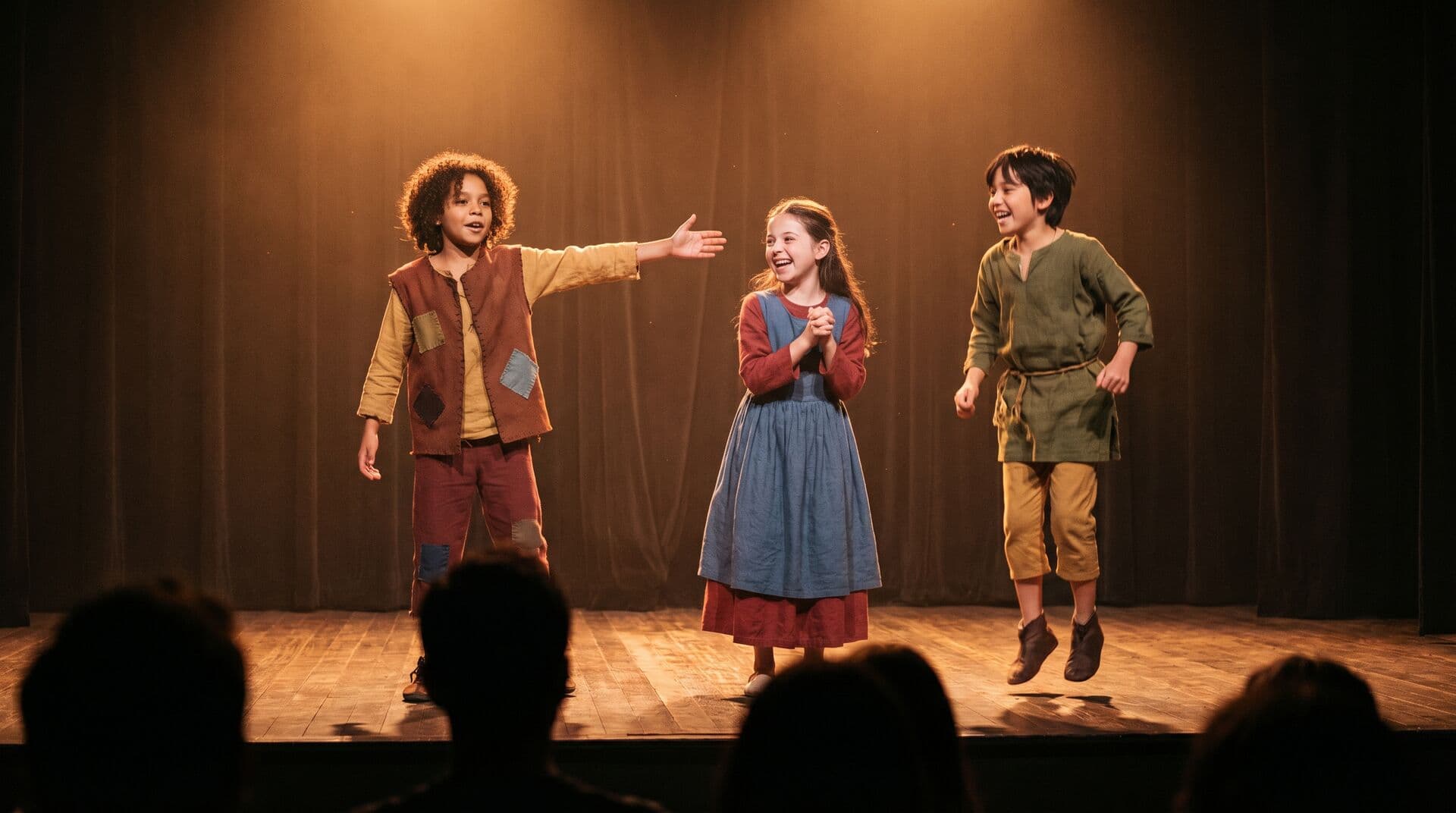
Portland is a city that takes the arts seriously. It has more independent bookstores per capita than almost any city in the country. It has a world-class children's theater. It has a symphony that runs youth programs. It has a visual arts museum, the Portland Art Museum, that's free for kids under 18.
The summer camp ecosystem reflects this. Based on our review of 234 Portland-area camps, 47 are arts-focused. That's roughly 20% of the total, which is unusually high for a mid-size metro. Portland's arts and performing arts camps are, by national standards, genuinely excellent, and they're one of the areas where the city has a real advantage over the generic camp landscape that ActivityHero and similar platforms serve.
Here's what's available and what makes each program worth knowing about.
Key Takeaways
- Portland has 47 arts-focused camps, representing 20% of its 234 total camp programs, the highest concentration in the Pacific Northwest based on ProjectKids data.
- Weekly costs range from $200 to $500, with arts camps averaging slightly less than STEM or outdoor alternatives.
- Theater camps build measurable empathy and emotional regulation skills. Visual arts develops spatial reasoning. Music strengthens math performance.
- Most arts camps still have availability into late spring, unlike popular STEM and nature programs that fill earlier.
What portland arts camps are available at a glance?
Across 234 Portland-area camps reviewed by ProjectKids, 47 focus on arts and performing arts, making it the second-largest category behind sports (ProjectKids, 2026). Finding the right fit depends on what your kid actually wants to do. Some programs cover every art form. Others go deep on one. Here's a quick comparison of the programs covered in this guide.
| Program | Art Form | Ages | Price/Week | Location | Best For | |, , , , -|, , , , , |, , , |, , , , , , |, , , , , |, , , , , | | Cognizart 360 Arts | Multi-arts (visual, music, theater, dance) | 5-12 | $275-$350 | SW Portland | Kids who want variety | | The Hangout PDX | Visual arts | K-5 | $200-$300 | NE Portland | Budget-friendly, scholarship available | | Portland Art Museum | Visual arts | 6-14 | $250-$375 | Downtown | Museum-quality instruction | | PCS Teen Theater Academy | Theater | 13-18 | $400-$500 | The Armory | Serious teen actors | | Spotlight Musical Theatre | Musical theater | 6-18 | $300-$425 | Portland | Singers who also act | | Northwest Vocal Arts | Choral/voice | 7-18 | $250-$350 | NE Alameda | Kids who love to sing | | Catlin Gabel Summer | Mixed arts/music | 5-15 | $350-$475 | SW Portland | Well-rounded arts + academics |
For a full breakdown of what Portland camps cost across all categories, see our Portland summer camp cost guide.
Citation Capsule: Portland's 47 arts-focused summer camps represent roughly 20% of its 234 total camp programs, the highest arts-camp concentration among mid-size Pacific Northwest metros, according to a 2026 review by ProjectKids of every registered camp in the Portland metro area.
What are the best visual arts camps in portland?
Portland's visual arts camps range from $200 to $375 per week, with options spanning beginner drop-in studios to museum-level instruction (ProjectKids, 2026). Three programs stand out for different reasons.
Cognizart by MetroArts (360 Arts Camp): Running for 33 years. Full immersion in visual arts, music, theater, and dance, Monday through Friday. This is the longest-running multi-arts camp in Portland and one of the most full. Kids don't just do one art form. They rotate through all of them.
The Hangout PDX: K-5 after-school visual arts program with summer camp sessions. NE Portland-based, scholarship support available for families below 60% of Portland AMI.
Portland Art Museum: Free for kids under 18 for general admission. Runs summer art camps and drop-in studio programs. One of the most underused resources in Portland for arts-interested kids.
Which theater and performing arts camps stand out?
Performing arts camps in Portland range from $300 to $500 per week, with Portland Center Stage's Teen Academy representing the most competitive program in the metro (Portland Center Stage, 2026). Here are the programs worth knowing about.
Portland Center Stage Teen Theater Academy (The Armory): The flagship professional theater in Portland runs a summer intensive for teens taught by industry professionals. This is not a "kids putting on a play" program. It's a serious training program at a professional theater. Limited spots, fills early.
Spotlight Musical Theatre Academy: Summer camps in Portland focused on musical theater. Strong reviews, good for kids who want to sing, dance, and act in an integrated program.
Northwest Vocal Arts Summer Choral Academy: Located at 5830 NE Alameda Street. For kids who love to sing. One of the few programs in Portland specifically focused on choral training for young people.
What about music camps in portland?
Portland has a strong youth music ecosystem outside of camps, including the Oregon Symphony's youth programs and multiple youth orchestras. But dedicated summer music camps are less developed than the visual arts and theater options.
Catlin Gabel School's summer camps include music programs. Portland Waldorf School runs nature-based summer camps that incorporate music and arts. For serious young musicians, the Lewis & Clark College summer programs include music intensives.
How do you choose between visual arts, performing arts, and music?
The art form matters less than the kid. But each discipline does attract and develop different strengths, and knowing this can help you narrow down a list of 47 programs to a short list of three.
Visual arts: Best for self-Directed kids
Visual arts camps give kids long stretches of quiet, focused time. Painting, sculpture, ceramics. These programs reward patience. If your kid spends hours drawing at home, or gets lost in building things, visual arts is a natural fit. Introverted kids often thrive here because the work is individual. There's no stage. No audience. Just the project.
Performing arts: Best for social, expressive kids
Theater and musical theater are group activities by nature. Kids rehearse together, perform together, problem-solve together. If your child lights up when telling stories or organizing games with friends, performing arts channels that energy. But here's the thing that surprises parents: shy kids often do well in theater too. Playing a character gives them permission to be loud in a way that feels safe.
Music: Best for pattern-Oriented, detail-Focused kids
Music camps develop listening skills, coordination, and an intuitive sense of structure. Kids who like puzzles, math, or coding often gravitate toward music without anyone prompting them. Choral programs like Northwest Vocal Arts add a social layer. If your child hums constantly or taps rhythms on every surface, take the hint.
Not sure where your kid fits? The first-time camp parent guide has more on matching personality to program type.
Citation Capsule: Each arts discipline develops distinct cognitive strengths in children. Visual arts builds spatial reasoning, performing arts improves empathy and emotional regulation, and music training correlates with stronger mathematical thinking, according to research published in the Journal of Educational Psychology (2019) and Educational Research Review (2020).
What does the research say about arts and child development?
A 2019 study in the Journal of Educational Psychology found that students with sustained arts education scored higher on creative problem-solving, with the strongest effects among low-income students (Journal of Educational Psychology, 2019). Theater, visual arts, and music each develop different capacities, and the research on all three is strong.
Theater specifically has been shown to improve empathy, communication, and emotional regulation in children. That claim alone is worth pausing on. In a world where every parent worries about screen time and social skills, the performing arts offer something structured sports and academic camps don't: practice at reading other people's emotions and responding to them.
Visual arts develops spatial reasoning and attention to detail. The Journal of Educational Psychology study found that students with sustained arts education scored higher on measures of creative problem-solving than peers in standard enrichment programs. The effect was strongest for kids from low-income households, where access to arts materials at home was limited.
Music builds mathematical thinking and auditory processing. The connection between music training and math performance has been documented repeatedly. A 2020 meta-analysis published in Educational Research Review covering 54 studies confirmed a small but consistent correlation between music instruction and improved spatial-temporal reasoning (Educational Research Review, 2020).
Here's what matters for parents choosing a summer camp: arts camps have measurable social-emotional benefits that standard academic or sports camps don't always provide. They teach kids to take creative risks, tolerate ambiguity, and express ideas without words. Those aren't soft skills. They're survival skills.
Citation Capsule: A 2020 meta-analysis in Educational Research Review covering 54 studies found a consistent correlation between music instruction and improved spatial-temporal reasoning in children. The effect held across age groups and income levels, suggesting music camps provide cognitive benefits beyond artistic training.
Can arts camps help kids who don't see themselves as "Artsy"?
According to the Journal of Educational Psychology (2019), the strongest creative problem-solving gains from arts education appeared among students who had the least prior exposure to arts materials. Portland parents considering arts camps for kids who aren't "arts kids" should know that the research isn't theoretical. It shows up in real behavior changes over a single summer.
The kid who "isn't artistic" often thrives in an arts camp environment precisely because the pressure to perform athletically or academically is absent. The Cognizart 360 Arts Camp, in particular, is designed for this. Kids rotate through multiple art forms and find the ones that resonate without being locked into a single discipline.
What are the practical advantages of portland arts camps?
Based on ProjectKids's analysis, arts camps in Portland average $275 to $400 per week, compared to $300 to $475 for STEM camps and $325 to $450 for outdoor camps in the same metro (ProjectKids, 2026). They also tend to have more availability than STEM camps and nature camps.
Arts camps in Portland tend to have more availability than STEM and nature camps. They're also, on average, slightly less expensive. If you're looking for a summer camp that's genuinely different from what your kid does during the school year, and your kid has any interest in creative expression, Portland's arts camp ecosystem is one of the best arguments for living here.
Most programs open registration in early spring. For tips on timing and avoiding waitlists, check the registration guide.
FAQ
My kid isn't artistic. should i still consider arts camp?
Yes. Most arts camps are designed for beginners, not prodigies. The Cognizart 360 Arts Camp rotates kids through visual arts, music, theater, and dance precisely so they can discover what clicks. Research consistently shows that kids who feel "non-artistic" gain the most confidence from creative programs because expectations are low and exploration is the point.
Which portland arts camp is best for shy kids?
Visual arts camps like The Hangout PDX and Portland Art Museum programs tend to work well for introverted kids. The focus is on individual projects, not performance. That said, theater programs like Portland Center Stage's Teen Academy report that many of their strongest participants started as the quietest kids in the room. Playing a character can be easier than being yourself in front of a group.
Are arts camps less competitive to get into than STEM or outdoor camps?
Generally, yes. Portland's 47 arts-focused camps represent the largest single category by count, and most still have availability into late spring. The exception is Portland Center Stage's Teen Theater Academy, which fills early due to limited spots. Spotlight Musical Theatre also fills quickly for older age groups. For everything else, you have more breathing room than you would with popular STEM or nature camps.
How much do portland arts camps cost compared to other types?
Arts camps in Portland range from $200 to $500 per week. The average falls between $275 and $400 weekly, which is slightly below STEM camps ($300 to $475) and comparable to outdoor programs (ProjectKids, 2026). Scholarship support is available at programs like The Hangout PDX for families below 60% of Portland's area median income. For a detailed cost comparison, see our Portland summer camp cost guide.
What age range do portland arts camps serve?
Most Portland arts camps accept kids ages 5 to 15, though the range varies by program. The Hangout PDX starts at kindergarten. Cognizart 360 Arts Camp serves ages 5 to 12. Portland Center Stage's Teen Theater Academy is specifically for ages 13 to 18. Northwest Vocal Arts accepts singers from age 7 through 18. Check individual program details for exact cutoffs.
Do portland arts camps offer extended care or full-day options?
Several programs offer full-day schedules, typically running from 9 AM to 3 PM. Extended care availability varies by camp. Cognizart 360 Arts Camp and Catlin Gabel run full-day programs. The Hangout PDX offers shorter sessions. For working parents who need before-and-after-care coverage, see our working parents summer childcare guide.
Citation Capsule: Portland's 47 arts camps represent the largest single-category concentration in the metro, with most programs maintaining availability into late spring 2026. Pricing ranges from $200 to $500 per week, averaging below STEM alternatives, according to ProjectKids's review of 234 Portland-area camps.
Sources
Planning your kid's whole summer?
Don't piece it together one camp at a time. Tell us your weeks and kids' ages, and we'll build a week-by-week plan that fills every week — free, no account needed to start.
Related Articles

Portland Theater Camps for Kids Who Need the Stage
Not all theater kids are the same. Some crave the spotlight, others prefer building sets. We help Portland parents navigate the summer and after-school theater camp scene to find the perfect fit.
Portland Swim and Water Safety Programs: Summer Planning for
Summer in Portland means water, and for nervous parents, that means swim lessons. This guide cuts through the noise to help you find the right program for your kids, from cautious beginners to confident swimmers.
Portland Sports Camps for Kids Who Are Not Travel-Team Kids
Your kid loves to run, jump, and throw, but you're not ready for the year-round commitment and expense of club sports. Here's how to find Portland sports camps that prioritize fun and movement over trophies.